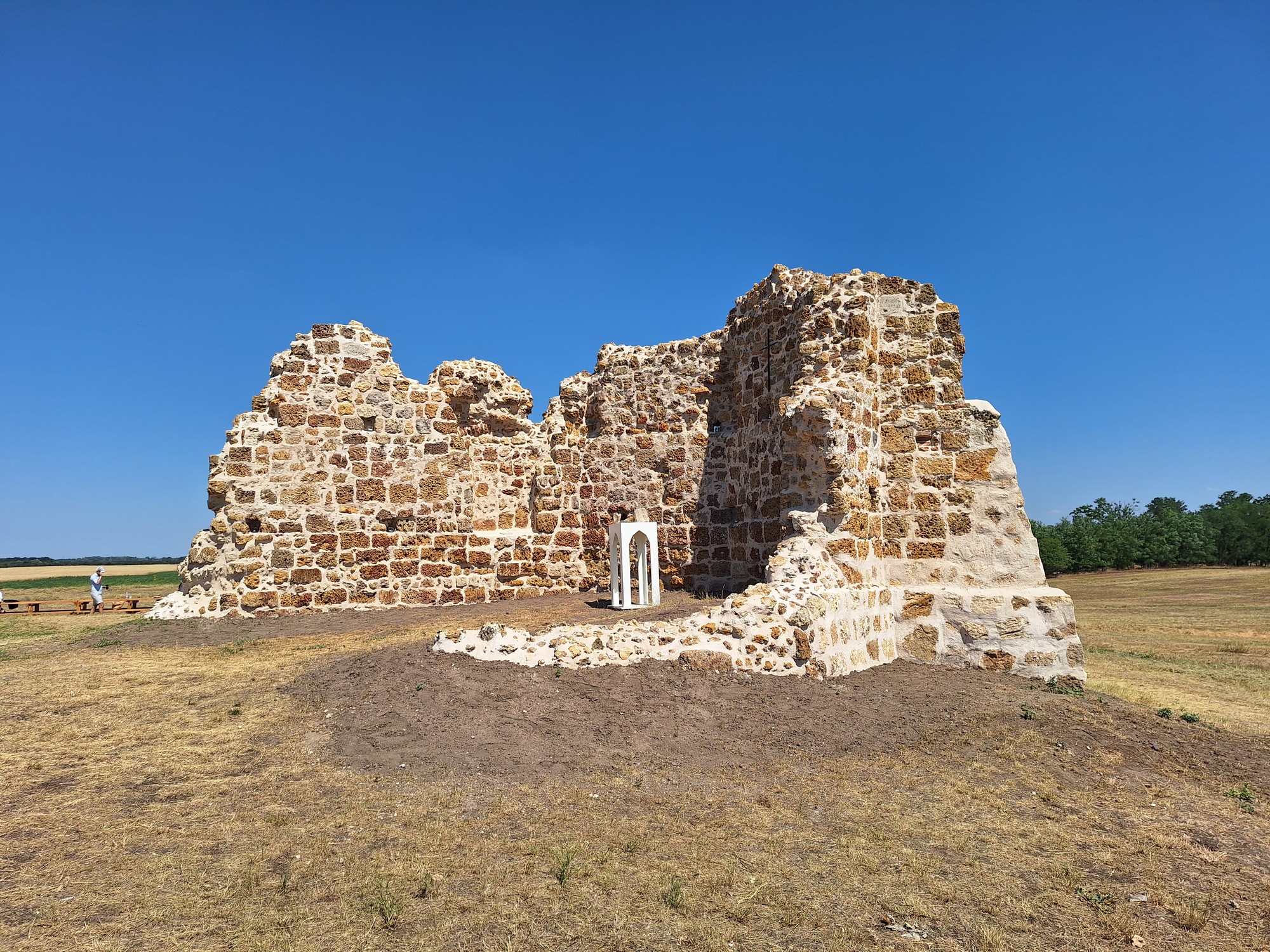
The Hungarian National Committee of ICOMOS presented the ICOMOS Award for the conservation and display of the Somogyszentpál-Varjaskér church ruin. Implemented within the framework of the ROM Vándor program of Market Építő Zrt and based on the designs of KÖZTI, the restoration preserves the harmonious balance of the ruin and nature. Our office was represented at the award ceremony by Kelemen Bálint, project lead architect and monument protection specialist.
On the occasion of World Monuments Day, the ICOMOS Award was presented by the Hungarian National Committee of ICOMOS, the largest international non-governmental organization for monument protection. The restoration of the Varjaskér church ruin, which was implemented based on the plans of our colleague, Kelemen Bálint, within the framework of the ROM Vándor program of Market Építő Zrt, also earned the recognition. The most important goal of the project was the conservation of the church ruin, preserving the naturalistic ruin contour with the smallest possible structural and proportional additions.
The uniqueness of the restoration of the medieval church ruin lies in the contemporary gate motif. The ruin is the remains of a brick church built in several periods in the village of Kér, founded around the 10th century. In the preparatory phase of design for the conservation, topographic and archaeological geophysical surveys, archaeological excavations and scientific documentation of building history were also prepared. The basis of the restoration concept (and the ROM Vándor project) was the technical renovation of the poetic ruin, the preservation of its inherent aesthetic and historical values and its natural and harmonious relationship with the landscape, with minimal but value-enhancing contemporary additions. A single new structure was built, which stabilizes the ruined wall and indicates the location and scale of the former gate with contemporary means at the same time, and also marks the sacred focal point of the space. The contours of the foundations of the one time cemetery, church and sacristry walls are marked by low ridges of earth. The surroundings of the ruin have also been given new life, the lilac shrubs have been pruned, the site have been graded and grassed.